
Deleting my way through our daily torrent of spam, I came across a bizarre item that is, if not interesting, at least slightly amusing. The MSN-run site for one of Japan’s major newspapers, Mainichi Daily News, trackbacked to my post from yesterday about japanese cell phone comics. They planted a link to a story about a part-time employee at a Nathan’s Hot Dog stand in a popular Japanese comics market. Apparently, the employee made some disparaging comments on his personal blog about obsessed comic book fans (known as “otakus”), creating a small uproar and leading Nathan’s Japan franchisees to issue a public apology.
Unless this is all some joke (it can be hard to tell), they seem to have found my post based on the keywords “japan” and “comics.” Whether it was a robot scouring the web or a Japanese editorial sub-sub with poor english, I’m not sure. But it’s disturbing that a major newspaper might be resorting to spam to promote itself. That’s usually the province of online poker and penis enlargement (oh god, the robots just perked up, I’m sure).
In a way, the trackback does indirectly support my post, in so far as the Nathan’s Hot Dog incident underscores the significance of comics in Japanese culture. But, c’mon Mainichi…
“talkr” lets you listen to your favorite blogs
Talkr, a new online software, transforms your favorite blogs from text to spoken word and provides downloadable podcasts for your mp3 player. I listened to a few free samples provided on their site and was pleasantly surprised by the non-robotic voice. I love this software not only for the convenience, but also for the accessibility it will offer to sight-impaired users.
in japan: comics via mobile phone
Another mobile lit item. Sony is increasing its mobile comics publishing service, offering around 300 popular “manga” titles to Japanese subscribers in the coming year.
From USA Today (via Smart Mobs):
Cell-phone comics use a technology called Comic Surfing, developed by Tokyo-based venture firm Celsys, which takes viewers through manga stories at a carefully calculated speed and sequence.
The manga frames are specially formatted to fit on tiny mobile phone screens. Pop-up frames and vibration during action scenes add to the drama. Cell-phone comics with preprogrammed sound effects are also coming soon…
Related:
“How Mobile Phones Conquered Japan” in Wired – discussing the new book “Personal, Portable, Pedestrian: Mobile Phones in Japanese Life”
and
“novels on your phone” in if:book – about Japanese cell phone fiction
schiller’s poetry for mobile phones

 This year, Germany celebrates the bicentennial of the death of Freidrich Schiller. As part of the commemoration, you can download a java application to your mobile phone containing 20 of his best known poems. (via textually)
death of the album? (or, for that matter, the novel?)
Warner is trying out a new business model for selling music over the web (BBC, CNET). The new “e-label” will sell music exclusively online (no CDs) in three-song clusters, abandoning the conventional album format and allowing emerging artists to prove themselves gradually, without the pressure of a sink-or-swim album deal. What would Sgt. Pepper say?
Crusty aficionados have for some time been lamenting the death of the album in the age of .mp3s, file-sharing and iTunes, where kids are growing up with vast, shifting libraries of individual tracks instead of meticulously ordered, packaged collections. While it’s true that a generation of shufflers may not have much respect for the integrity of albums, it’s important to remember that most albums don’t have all that much integrity to begin with. When the recording industry moved from singles to the longer format of albums, it’s not as though there was a corresponding growth in the amount of quality material. As a result, most albums consist of a couple of hit singles padded with filler. No one should mourn the disappearance of this sort of album.
Albums the world would be better off without:
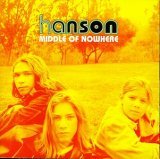

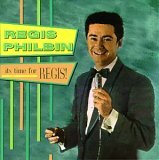
Making a good album is difficult, not unlike putting together a good collection of short fiction, or, in the case of concept albums, an entire novel. I like Warner’s idea because it allows musicians to mature gradually, building a fan base and working their way up to the longer form. In turn, one-hit wonders can fizzle out naturally without burdening the world with rotting, opus-sized legacies.
I’m not too worried about the death of the album, at least not for some time. Artists that are capable of producing worthwhile albums will continue to release long format work, and kids will continue to pick and choose songs, and shuffle away carefully chosen track orders. But at the same time, they will make eclectic playlists, some of them uncovering hidden connections that can only be made manifest by porous, digital libraries. It seems to me that it will be a healthy give and take. Just as I’m confident that the novel will survive in an age of scattershot online reading, so will the album in the age of the iPod.
(One way to foil the shufflers would be to release albums in one big track. Remember “Thick As A Brick”?)
continuous computing: backchannels as impromptu textbooks
“Continuous computing is an emergent phenomenon–a complex pattern of social behaviors that arises from the use of a variety of simpler digital tools. It advances in unexpected directions as people find innovative ways to put these commercial and open-source technologies to use in their social lives.”
The above quote is from Social Machines, an article by Wade Roush, recently published in Technology Review. According to Roush, wireless devices have created a “virtual information field” that allows us to “both pull information about virtually anything from anywhere, at any time, and push their own ideas and personalities back onto the Internet — without ever having to sit down at a desktop computer.” This phenomenon of constant connectivity is changing the way we learn and the way we participate in classroom environments.
In classrooms and lecture halls with open access to wireless networks, students can use cellphones, laptop computers, and other wireless devices to silently converse (via text or instant messaging systems) with one another or to surf the net during class. This secondary layer of classroom communication is known as the backchannel. Some instructors recognize the inevitability of the backchannel and are experimenting with how to organize these activities in a productive manner.
The key characteristic of the back channel is that it allows students to participate in the “push/pull” of constant connectivity that Roush speaks of. Students can “pull” supplementary information from the web and “push” their interpretation of the facts or their ideas and queries about the ongoing lecture into the backchannel social space. The University of Southern California’s Interactive Media Division has experimented with multimedia back, front, and side channels. Here is a brief description of the Backchannel options for USC IMD Speakers outlined by Justin Hall.
We have three primary areas of backchannel work. Speakers, participants, feel free to review these various scenarios and let us know what you think. We have fourteen screens up on the walls of the lab, so these various functions typically share visual space with a speaker’s own supporting visual materials.
Backchannel During a speaker’s presentation, students with laptops will chat about the topics at hand. Typically, we post the thread of comments on two-to-three of the fourteen screens.
Frontchannel We can provide a special area just for questions for the speaker. Then, during the talk, if someone has a clarification they’d like, or a question they want to ask, the speaker can see that question pop up on a small monitor at the front of the room. The speaker can answer it when they feel ready!
Sideshow We have several students who are trained expert Google Jockeys. If a speaker would like to have their own presentation supplemented by a stream of images, statistics, background articles, as they talk, they should let us know and we will arrange for students to run the sideshow presentation on their research.
These various areas represent experiments in collaborative multimedia-internet enhanced learning. We welcome your suggestions! And if you feel that these might be too distracting, we’re happy to reign in some of our participation during the presentation. The intent is to involve students in the lecture and to allow people to use the tools at their disposal to engage a speaker’s research in real time.
A variety of responses to the backchannel were expressed in a January 2005 online discussion entitled “is the backchannel working.” Some students found it “useful (for keeping track of the points, for cross reference, and for fact checking), immersive, stimulating and engaging;” while others found it, “distracting, unnecessary, detrimental, irrelevant, pointless, alienating,” and even “rude” as evidenced in this exchange:
What ever happened to giving your full attention to the guest speaker? Since when is carrying on a side conversation an acceptable thing to do? What happened to our manners?
I wish I had saved the logs from last semester. But I recall several presentations where the speaker stopped and asked the group what was going on with that back channel that is so funny. I wonder how the professors who presented last semester feel about this.
Posted by: Shelby at January 31, 2005 07:38 PM
I believe that we are ALL here (professors included) because we were the really smart kids that stared at clouds, wrote stories, drew, and made up games during class. That’s how I feel when my peers are obviously multi-tasking during class or during a presentation. I don’t think it’s rude to multi-task.
I do think it’s rude to type up really dumb jokes or ASCII pictures on the backchannel that are unrelated to the presentation. However, I think it’s really awesome that our professors and our presenters are open to our experiments in multi-tasking and over-stimulation. Especially in the age of the internet, the next gen behind us are going to be so savvy at carrying on multiple conversations and multiple lines of thought simultaneously, I think it’s good to experiment with this instead of putting “miss manners” restrictions on the class.
Posted by: kellee at February 2, 2005 03:37 PM
Although this form of collaborative learning is still in the experimental stage, it seems to have a great deal of potential. Well-run backchannels could serve as improptu, collaborative textbooks. Students and so-called “Google Jockeys” could gather, present, and discuss the supplementary information as the instructor lectures. This process would be inspired by the instructor, but not directed by the instructor.
wanted: an online publishing business model
Technology Research News, an excellent online magazine covering the most important developments in technology and science, is struggling to survive. In an impassioned letter to the reader, the TRN editors explain how, even after building up a substantial readership (over 200,000 unique visitors monthly) since its founding in 2000, and exploiting all the routine methods for generating revenue on the web without actually charging for subscriptions (Lexis Nexis licensing payments, Google text ads, and sales of .pdf white papers and special reports), they are still unable to support basic site maintenance, let alone pay their tiny staff of two full-time editors, one contributing editor and two part-time staffers. They are now experimenting with voluntary donations, hoping to rase at least $100,000 annually to cover basic costs.
This weekend, their plea was relayed to Slashdot where it was reframed as a call for ideas for new web publishing paradigms.
TRN’s story is typical of these transitional times. They consider themselves “information farmers,” providing valuable reporting from the frontiers of science at a time when those frontiers are greatly expanding, and, simultaneously, coverage in print media is contracting. No doubt their work is valuable and there is a demand. The web has set the stage for a whole new class of information farmers like TRN. But we still haven’t figured out a model for basic subsistence.
the blog as a record of reading
An excellent essay in last month’s Common-Place, “Blogging in the Early Republic” by W. Caleb McDaniel, examines the historical antecedents of the present blogging craze, looking not to the usual suspects – world shakers like Martin Luther and Thomas Paine – but to an obscure 19th century abolitionist named Henry Clarke Wright. Wright was a prolific writer and tireless lecturer on a variety of liberal causes. He was also “an inveterate journal keeper,” filling over a hundred diaries through the course of his life. And on top of that, he was an avid reader, the diaries serving as a record of his voluminous consumption. McDaniel writes:

While private, the journals were also public. Wright mailed pages and even whole volumes to his friends or read them excerpts from the diaries, and many pages were later published in his numerous books. Thus, as his biographer Lewis Perry notes, in the case of Wright, “distinctions between private and public, between diaries and published writings, meant little.”
Wright’s journaling habit is interesting not for any noticeable impact it had on the politics or public discourse of his day; nor (at least for our purposes) for anything particularly memorable he may have written. Nor is it interesting for the fact that he was an active journal-keeper, since the practice was widespread in his time. Wright’s case is worth revisiting because it is typical — typical not just of his time, but of ours. It tells a strikingly familiar story: the story of a reader awash in a flood of information.
Wright, in his lifetime, experienced an incredible proliferation of printed materials, especially newspapers. The print revolution begun in Germany 400 years before had suddenly gone into overdrive.
The growth of the empire of newspapers had two related effects on the practices of American readers. First, the new surplus of print meant that there was more to read. Whereas readers in the colonial period had been intensive readers of selected texts like the Bible and devotional literature, by 1850 they were extensive readers, who could browse and choose from a staggering array of reading choices. Second, the shift from deference to democratization encouraged individual readers to indulge their own preferences for particular kinds of reading, preferences that were exploited and targeted by antebellum publishers. In short, readers had more printed materials to choose from, more freedom to choose, and more printed materials that were tailored to their choices.
Wright’s journaling was his way of metabolizing this deluge of print, and his story draws attention to a key aspect of blogging that is often overshadowed by the more popular narrative – that of the latter-day pamphleteer, the lone political blogger chipping away at mainstream media hegemony. The fact is that most blogs are not political. The star pundits that have risen to prominence in recent years are by no means representative of the world’s roughly 15 million bloggers. Yet there is one crucial characteristic that is shared by all of them – by the knitting bloggers, the dog bloggers, the macrobiotic cooking bloggers, along with the Instapundits and Daily Koses: they are all records of reading.
The blog provides a means of processing and selecting from an overwhelming abundance of written matter, and of publishing that record, with commentary, for anyone who cares to read it. In some cases, these “readings” become influential in themselves, and multiple readers engage in conversations across blogs. But treating blogging first as a reading practice, and second as its own genre of writing, political or otherwise, is useful in forming a more complete picture of this new/old phenomenon. To be sure, today’s abundance makes the surge in 18th century printing look like a light sprinkle. But the fundamental problem for readers is no different. Fortunately, blogs provide us with that much more power to record and annotate our readings in a way that can be shared with others. We return to Bob’s observation that something profound is happening to our media consumption patterns.
As McDaniel puts it:
…readers, in a culture of abundant reading material, regularly seek out other readers, either by becoming writers themselves or by sharing their records of reading with others. That process, of course, requires cultural conditions that value democratic rather than deferential ideals of authority. But to explain how new habits of reading and writing develop, those cultural conditions matter as much–perhaps more–than economic or technological innovations. As Tocqueville knew, the explosion of newspapers in America was not just a result of their cheapness or their means of production, any more than the explosion of blogging is just a result of the fact that free and user-friendly software like Blogger is available. Perhaps, instead, blogging is the literate person’s new outlet for an old need. In Wright’s words, it is the need “to see more of what is going on around me.” And in print cultures where there is more to see, it takes reading, writing, and association in order to see more.
(image: “old men reading” by nobody, via Flickr)
the digital novelist
 “Print publishing has had a great 500 year run,” says 77 year old novelist Warren Adler, “but the print book is morphing into the screen book.” Mr. Adler, who has published 27 print novels including “War of the Roses,” is publishing his 28th, “Death of A Washington Madame,” electronically and e-mailing it for free to anyone who asks.
In an article in Sunday’s New York Times, he tells reporter Claudia Deutsch that, “the big publishing houses just don’t get it.” So Mr. Adler has taken matters into his own hands. According to the official Warren Adler website, he has:
required the English language and foreign rights to his entire backlist of 25 novels and has made them available in ebook formats and Print-on-Demand formats in trade and hardcover. They are available on the web through all bookselling sites and can be ordered through chain and independent bookstores.
blogsploitation: outsourcing the manufacture of influence
This is truly strange. A pair of young American entrepreneurs is outsourcing work to China – blogging work. 25 Chinese bloggers are being hired to maintain, under anglo-american names and personae, a fleet of 500 “unrelated” blogs, whose sole purpose is to harvest advertising revenue and generate buzz for client sites (story). They call this technique “astroturfing.” For it to work, they will have to train their team of low-wage, foreign scribes to adopt a voice that is convincing to Western audiences – more than that familiar character from the world of outsourcing, the cheerful lady on the tech support line introducing herself, in a suspiciously Bengali accent, as Mary Beth.
To march these sweatshop bloggers across the cultural divide, the company is undertaking a bizarre experiment in remote socialization, inundating their staff with Western music and movies, honing their pop culture instincts, and assigning lists of topics for them to master. Such a weird, morally cockeyed scheme could only be devised up by someone in the grip of severe boredom (though there is a faint whiff of cultural revolution). Sure enough, “Blogoriented,” as the venture is punningly called, seems to have been conceived as a fanciful escape for two cogs (named Steve and Jeff) from the stultification of office existence. On their blog, Steve describes the genesis of the project, as well as his reservations:
My problem with this venture is that we are exploiting a once pure medium and diluting the blogosphere with what are basically lies. To Jeff this is a non-issue. He spent the last few years as a software engineer in China coordinating projects between american programmers and their outsourced counterparts. He trained the chinese programmers so well he was no longer needed and was offered a reduced salary or the door. To him this venture is his way to tap into a hot economic trend and avoid working for someone else his whole life. For me this is a way out of the cubicle. I’ve spent the last few years watching the clock as a financial analyst for a large credit card firm. Finding the best ways to maximize the number of clients that carry a balance was just too depressing for me. Blogs are intrinsically a blend of fact and artistry. Our product really won’t be that different.
Reading the intro, it’s clear that Steve has appointed himself as the troubled conscience of the team. He begins with a quote from Matthew – “For what is a man profited, if he shall gain the whole world, and lose his own soul?” (16:26) – and goes on to describe their business strategy, intermittently bemoaning the hellfire he fears will greet their bastardization of the blog form. But dreams of big bucks brush aside concerns for the immortal soul. Whether or not this questionable caper succeeds, their personal blog of Steve and Jeff promises to be an entertaining read.