
Bob will be appearing online at the Chronicle of Higher Education site for a live chat with readers about our recent cover story. The topic: “conversational scholarship.” 12 noon E.S.T.
UPDATE: you can now read a transcript of the chat here (same as the live link).
MediaCommons 2: renewed publics, revised pedagogies
What a week it has been since Kathleen first posted about the MediaCommons project we are developing at the Institute for the Future of the Book. The responses we’ve received so far have mostly been both exciting and constructive and they clearly point to a community out there hungry for a digital scholarly network providing new opportunities for interaction and new modes of scholarship, pedagogy and community building.
As a co-creator with Christopher Lucas of Flow: A critical forum on television and media culture, an online journal intended to foster accessible and relevant conversations amongst media scholars and non-academic communities, I have seen first-hand the positive impact that more fluid exchanges of ideas can have on media studies scholarship. Flow’s mission is to provide a space where researchers, teachers, students, and the public can read about and discuss the changing landscape of contemporary media at the speed that media moves. Flow is organized around short, topical columns written by respected media scholars on a bi-weekly schedule. These columns invite response from the critical community by asking provocative questions that are significant to the study and experience of media.
The journal has been put to use in various classroom environments as well, with students either responding to pieces online or the inclusion of various columns in course packets, though this aspect of Flow’s mission has never achieved it’s fullest potential. Moreover, while the journal has been a phenomenal success amongst media studies scholars, it has largely failed to attract other constituencies on a consistent basis or engage them in critical conversations about media. My involvement with MediaCommons emerges out of a desire to make these scholarly conversations relevant to other constituencies — whether they be media producers, legislators, lobbyists, activists, students, or informed consumers — re-establishing the role of the academic as public intellectual and steward or critical conversations.
Today, I am going to write a little bit more about the pedagogical and community outreach goals of the site. These ideas are still being developed and we are hopeful that readers will chime in with other possibilities and suggestions as well. While I will discuss each of these subjects separately, one of the exciting opportunities with MediaCommons would be the integration of scholarly discourse, pedagogy, and community outreach in symbiotic ways.
ebook ipod rumored
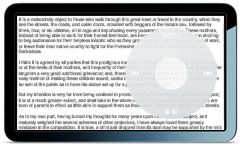 Engadget has it from inside sources at Apple that a next-generation iPod is in the works with a larger screen and a full-fledged text reader:
…two bits from separate, trustworthy insiders that Apple’s not satisfied merely vending Audible‘s books-on-digital-audio solution. With the iRex iLiad and Sony PRS-500 Portable Reader both right around the corner, is it possible the next iPod might catch the eBook bug? We’d say the possibility is very real, since according to a source at a major publishing house, they were just ordered to archive all their manuscripts — every single one — and send them over to Apple’s Cupertino HQ.
So Audible, huh? Interesting. They got a toehold in the market with audiobooks, and may now be making the transition to ebooks.
A separate trusted source let us know that the next iPod will have a substantial amount of screen real estate (as we’d all suspected), as well as a book reading mode that pumps up the contrast and drops into monochrome for easy reading. It’s no e-ink, sure, but a widescreen iPod would be well suited for the purpose, and according to our source, the books you’d buy (presumably through iTunes) won’t have an expiration…
I’d hope that such a device would have wifi, a web browser and an RSS reader that could be taken offline. I think that books will only be a part of the equation.
Teleread has the ebook standards angle.
wikipedia not safe for work
 Stacy Schiff takes a long, hard look at Wikipedia in a thoughtful essay in the latest New Yorker. She begins with a little historical perspective on encyclopedias, fitting Wikipedia into a distinguished, centuries-long lineage of subversion that includes, most famously, the Encyclopédie of 1780, composed by leading French philosophes of the day such as Diderot, Rousseau and Voltaire. Far from being the crusty, conservative genre we generally take it to be, the encyclopedia has long served as an arena for the redeployment of knowledge power:
In its seminal Western incarnation, the encyclopedia had been a dangerous book. The Encyclopédie muscled aside religious institutions and orthodoxies to install human reason at the center of the universe–and, for that muscling, briefly earned the book’s publisher a place in the Bastille. As the historian Robert Darnton pointed out, the entry in the Encyclopédie on cannibalism ends with the cross-reference “See Eucharist.”
But the dust kicked up by revolution eventually settles. Heir to the radical Encyclopédie are the stolid, dependable reference works we have today, like Britannica, geared not at provoking questions, but at providing trustworthy answers.
Wikipedia’s radicalism is its wresting of authority away from the established venues — away from the very secular humanist elite that produced works like the Encyclopédie and sparked the Enlightenment. Away from these and toward a new networked class of amateur knowledge workers. The question, then, and this is the question we should all be asking, especially Wikipedia’s advocates, is where does this latest revolution point? Will this relocation of knowledge production away from accredited experts to volunteer collectives — collectives that aspire no less toward expertise, but in the aggregate performance rather than as individuals — lead to a new enlightening, or to a dark, muddled decline?
Or both? All great ideas contain their opposites. Reason, the flame at the heart of the Enlightenment, contained, as Max Horkheimer famously explained, the seeds of its own descent into modern, mechanistic barbarism. The open source movement, applied first to software, and now, through Wikipedia, to public knowledge, could just as easily descend into a morass of ignorance and distortion, especially as new economies rise up around collaborative peer production and begin to alter the incentives for participation. But it also could be leading us somewhere more vital than our received cultural forms — more vital and better suited to help us confront the ills of our time, many of them the result of the unbridled advance of that glorious 18th century culture of reason, science and progress that shot the Encyclopédie like a cork out of a bottle of radical spirits.
Which is all the more reason that we should learn how to read Wikipedia in the fullest way: by exploring the discussion pages and revision histories that contextualize each article, and to get involved ourselves as writers and editors. Take a look at the page on global warming, and then pop over to its editorial discussion, with over a dozen archived pages going back to December, 2001. Dense as hell, full of struggle. Observe how this new technology, the Internet, through the dynamics of social networks and easy publishing tools, enables a truer instance of that most Enlightenment of ideas: a reading public.
All of which led me to ponder an obvious but crucial notion: that a book’s power is derived not solely from its ideas and language, but also from the nature of its production — how and by whom it is produced, our awareness of that process, and our understanding of where the work as a whole stands within the contemporary arena of ideology and politics. It’s true, Britannica and its ilk are descendants of a powerful reordering of human knowledge, but they have become an established order of their own. What Wikipedia does is tap a long-mounting impulse toward a new reordering. Schiff quotes Charles Van Doren, who served as an editor at Britannica:
Because the world is radically new, the ideal encyclopedia should be radical, too…. It should stop being safe–in politics, in philosophy, in science.
The accuracy of this or that article is not what is at issue here, but rather the method by which the articles are written, and what that tells us. Wikipedia is a personal reeducation, a medium that is its own message. To roam its pages is to be in contact, whether directly or subliminally, with a powerful new idea of how information gets made. And it’s far from safe.
Where this takes us is unclear. In the end, after having explored many of the possible dangers, Schiff acknowledges, in a lovely closing paragraph, that the change is occurring whether we like it or not. Moreover, she implies — and this is really important — that the technology itself is not the cause, but simply an agent interacting with preexisting social forces. What exactly those forces are — that’s something to discuss.
As was the Encyclopédie, Wikipedia is a combination of manifesto and reference work. Peer review, the mainstream media, and government agencies have landed us in a ditch. Not only are we impatient with the authorities but we are in a mood to talk back. Wikipedia offers endless opportunities for self-expression. It is the love child of reading groups and chat rooms, a second home for anyone who has written an Amazon review. This is not the first time that encyclopedia-makers have snatched control from an élite, or cast a harsh light on certitude. Jimmy Wales may or may not be the new Henry Ford, yet he has sent us tooling down the interstate, with but a squint back at the railroad. We’re on the open road now, without conductors and timetables. We’re free to chart our own course, also free to get gloriously, recklessly lost.
cover story in chronicle of higher ed.
Which focuses primarily on GAM3R 7H30RY and MediaCommons, and implications for the future of scholarly discourse. There are substantial interview sections with McKenzie Wark and Kathleen Fitzpatrick. We’re excited.
Check it out:
– Chronicle subscribers
– Open URL
understanding bloggers
Last week, the Pew Internet & American Life Project released a study on blogging. The findings describe the characteristics of the blogging community. The ways blogging as a communication tool supports public speech are gaining clarity and support through this study. It estimates that 12 million people in the US are blogging. Bloggers, as compared to internet users, are more ethnically diverse, younger and highly wired. Further, an important aspect is that the majority of bloggers (54%) has never published media before they started blogging. 37% of bloggers report that they post about personal experiences, the largest response for that question. Not surprisingly, bloggers read blogs, and there is a direct correlation between the frequency of a blogger’s posting and how often she read blogs. The growth of blogging will become more important as it is encouraging the roles of reader and writer to merge. We’ve discussed this merger before, but it is great to have numbers to support the discussion.
As internet users are becoming authors and publishers, I am curious to watch the future development of bloggers as a community and the possible impact they can have on policy issues. Is there the opportunity for bloggers to become a vehicle for social change, especially on Internet issues? 12 million bloggers could demand the attention of legislators and courts on the issues of net neutrality, copyright, privacy and open access. Although, as we have discussed in the past, the blogosphere is often a partisan space. The Pew study also confirms its diversity. Therefore, mobilizing this community is a challenging task. However, the sheer number of bloggers foretells that some of them are bound to find themselves dealing with these issues, especially with copyright and intellectual property. My hope then would be that these inevitable frictions would bring further into the mainstream these issues and broaden the discussion by the often one-sided debates of the telecommunications industry and media conglomerates.
what would susan sontag make of flickr?
This post takes a bit of a set-up. Six times over the past twelve years (including the last four) I’ve had the lucky opportunity to spend a bit of the summer on the northeast coast of Sardinia. The place is filled with contradictions. The landscape is arid, almost desert-like, yet it merges effortlessly with the sea. The gentle wind, lapping waters and sublime beauty disguise a harsh reality–the rocks on land and sea are sharp and unforgiving of error. The stone on the land is red granite but THE rock, the 2 mile long, nearly one-mile high island that dominates the seascape is uncharacteristically made of limestone. There is no electricity except in the kitchen and workshop. We live in concrete-floor huts down by the water. We are always aware of nature here — both its beauty and its danger. For reasons too complicated to go into now, I am also acutely aware of differences of class and race here. The overall effect of these contradictions is that I am extremely conscious of where I am and how lucky I am to be here.
The other day I read John Berger’s 1978 essay, “The Uses of Photography,” in which he reflects upon the ideas in Susan Sontag’s seminal book, On Photography.
Berger quotes Sontag:
A capitalist society requires a culture based on images. It needs to furnish vast amounts of entertainment in order to stimulate buying and anaesthetize the injuries of class, race and sex. And it needs to gather unlimited amounts of information, the better to exploit the natural resource, increase productivity, keep order, make war, give jobs to bureaucrats. The camera’s twin capacities, to subjectivise reality and to objectify it, ideally serve these needs and strengthen them. Cameras define reality in the two ways essential to the workings of an advanced industrial society: as a spectacle (for masses) and as an object of surveillance (for rulers). The production of images also furnishes a ruling ideology. Social change is replaced by a change in images.
Then he raises the question of whether there is a new way to conceive of the social purpose and practice of photography:
Her theory of the current use of photographs leads one to ask whether photography might serve a different function. Is there an alternative photographic practice? The question should not be answered naively. Today no alternative professional practice (if one thinks of the profession of photographer) is possible. The system can accommodate any photograph. Yet it may be possible to begin to use photographs according to a practice addressed to an alternative future.
. . . . For the photographer this means thinking of her or himself not so much as a reporter to the rest of the world but, rather, as a recorder for those involved in the events photographed [emphasis added]. The distinction is crucial.
The passage in bold above hit me like a ton of bricks. The midday meal here is the important one. The guests and staff eat together on a shaded platform looking out at the island described above (think Ayres Rock rising out of the water rather than planted in the desert). The recipes are local; the ingredients almost all grown on the property or caught in the sea at our doorstep. The result is about as perfect as a meal can be — completely in synch with time and place. I’ve made it a habit each day to photograph the food as it is laid out buffet style. I do this for myself but also for “foodie” friends back home. After reading Berger’s note above I realized how wrong-headed this “reportage” has been. My photographs of beautifully prepared food do not include any hint of the effort required to grow and prepare it, the sublime surroundings in which both staff and guests eat together, or the feelings of well-being that the experience engenders in us all. [I know that last sounds self-justifying or at the least absurdly naíve, but for now you’ll have to accept my sense that even the most well worked out social hierarchies, can under certain conditions and at certain moments turn into their opposite.]
Berger goes on to suggest that key to a new photographic practice is the construction of context:
The alternative use of photographs which already exist leads us back once more to the phenomenon and faculty of memory. The aim must be to construct a context for a photograph, to construct it with words, to construct it with other photographs, to construct it by its place in an ongoing text of photographs and images.
Photographs, at least those which intend to “report” preserve an instant in an ocean of time and therefore Berger contend they require context to give them meaning.
Which in turn brings me to the question of this post which I very much hope some of you will chime in on — what would Susan Sontag have made of Flickr? Originally, it seems, Flickr was conceived simply as a personal repository of images. In that sense it provides no antidote to the current practice of photography. However, as it begins to grow into a social network, where individuals begin to provide context and meaning to images, is it possible that Flickr could be a step to a new practice of photography. If so, what sorts of functionality need to be developed for Flickr and other related tools?
physical books and networks 2
Much of our time here is devoted to the extreme electronic edge of change in the arena of publishing, authorship and reading. For some, it’s a more distant future than they are interested in, or comfortable, discussing. But the economics and means/modes of production of print are being no less profoundly affected — today — by digital technologies and networks.
The Times has an article today surveying the landscape of print-on-demand publishing, which is currently experiencing a boom unleashed by advances in digital technologies and online commerce. To me, Lulu is by far the most interesting case: a site that blends Amazon’s socially networked retail formula with a do-it-yourself media production service (it also sponsors an annual “Blooker” prize for blog-derived books). Send Lulu your book as a PDF and they’ll produce a bound print version, in black-and-white or color. The quality isn’t superb, but it’s cheap, and light years ahead of where print-on-demand was just a few years back. The Times piece mentions Lulu, but focuses primarily on a company called Blurb, which lets you design books with customized software called BookSmart, which you can download free from their website. BookSmart is an easy-to-learn, template-based assembly tool that allows authors to assemble graphics and text without the skills it takes to master professional-grade programs like InDesign or Quark. Blurb books appear to be of higher quality than Lulu’s, and correspondingly, more expensive.
 Reading this reminded me of an email I received about a month back in response to my “Physical Books and Networks” post, which looked at authors who straddle the print and digital worlds. It came from Abe Burmeister, a New York-based designer, writer and artist, who maintains an interesting blog at Abstract Dynamics, and has also written a book called Economies of Design and Other Adventures in Nomad Economics. Actually, Burmeister is still in the midst of writing the book — but that hasn’t stopped him from publishing it. He’s interested in process-oriented approaches to writing, and in situating acts of authorship within the feedback loops of a networked readership. At the same time, he’s not ready to let go of the “objectness” of paper books, which he still feels is vital. So he’s adopted a dynamic publishing strategy that gives him both, producing what he calls a “public draft,” and using Lulu to continually post new printable versions of his book as they are completed.
His letter was quite interesting so I’m reproducing most of it:
Using print on demand technology like lulu.com allows for producing printed books that are continuously being updated and transformed. I’ve been using this fact to develop a writing process loosely based upon the linux “release early and release often” model. Books that essentially give the readers a chance to become editors and authors a chance to escape the frozen product nature of traditional publishing. It’s not quite as radical an innovation as some of your digital and networked book efforts, but as someone who believes there always be a particular place for paper I believe it points towards a subtly important shift in how the books of the future will be generated.
…one of the things that excites me about print on demand technology is the possibilities it opens up for continuously evolving books. Since most print on demand systems are pdf powered, and pdfs have a degree of programability it’s at least theoretically possible to create a generative book; a book coded in such a way that each time it is printed an new result comes out. On a more direct level though it’s also very practically possible for an author to just update their pdf’s every day, allowing for say a photo book to contain images that cycle daily, or the author’s photo to be a web cam shot of them that morning.
When I started thinking about the public drafting process one of the issues was how to deal with the fact that someone might by the book and then miss out on the content included in the edition that came out the next day. Before I received my first hard copies I contemplated various ways of issuing updated chapters and ways to decide what might be free and what should cost money. But as soon as I got that hard copy the solution became quite clear, and I was instantly converted into the Cory Doctrow/Yochai Benkler model of selling the book and giving away the pdf. A book quite simply has a power as an object or artifact that goes completely beyond it’s content. Giving away the content for free might reduce books sales a bit (I for instance have never bought any of Doctrow’s books, but did read them digitally), but the value and demand for the physical object will still remain (and I did buy a copy of Benkler’s tome.) By giving away the pdf, it’s always possible to be on top of the content, yet still appreciate the physical editions, and that’s the model I have adopted.
And an interesting model it is too: a networked book in print. Since he wrote this, however, Burmeister has closed the draft cycle and is embarking on a total rewrite, which presumably will become a public draft at some later date.
initial responses to MediaCommons
…have been quite encouraging. In addition to a very active and thought-provoking thread here on if:book, much has been blogged around the web over the past 48 hours. I’m glad to see that most of the responses around the web have zeroed in on the most crucial elements of our proposal, namely the reconfiguration of scholarly publishing into an open, process-oriented model, a fundamental re-thinking of peer review, and the goal of forging stronger communication between the academy and the publics it claims to serve. To a great extent, this can be credited to Kathleen’s elegant and lucid presentation the various pieces of this complex network we hope to create (several of which will be fleshed out in a post by Avi Santo this coming Monday). Following are selections from some of the particularly thoughtful and/or challenging posts.
Many are excited/intrigued by how MediaCommons will challenge what is traditionally accepted as scholarship:
In Ars Technica, “Breaking paper’s stranglehold on the academy“:
…what’s interesting about MediaCommons is the creators’ plan to make the site “count” among other academics. Peer review will be incorporated into most of the projects with the goal of giving the site the same cachet that print journals currently enjoy.
[…]
While many MediaCommons projects replicate existing academic models, others break new ground. Will contributing to a wiki someday secure a lifetime Harvard professorship? Stranger things have happened. The humanities has been wedded to an individualist research model for centuries; even working on collaborative projects often means going off and working alone on particular sections. Giving credit for collaboratively-constructed wikis, no matter how good they are, might be tricky when there are hundreds of authors. How would a tenure committee judge a person’s contributions?
And here’s librarian blogger Kris Grice, “Blogging for tenure?“:
…the more interesting thrust of the article, in my opinion, is the quite excellent point that open access systems won’t work unless the people who might be contributing have some sort of motivation to spend vast amounts of time and energy on publishing to the Web. To this end, the author suggests pushing to have participation in wikis, blogs, and forums count for tenure.
[…]
If you’re out there writing a blog or adding to a library wiki or doing volunteer reference through IRC or chat or IM, I’d strongly suggest you note URLs and take screenshots of your work. I am of the firm opinion that these activities count as “service to the profession” as much as attending conferences do– especially if you blog the conferences!
A bunch of articles characterize MediaCommons as a scholarly take on Wikipedia, which is interesting/cool/a little scary:
The Chronicle of Higher Education’s Wired Campus Blog, “Academics Start Their Own Wikipedia For Media Studies“:
MediaCommons will try a variety of new ideas to shake up scholarly publishing. One of them is essentially a mini-Wikipedia about aspects of the discipline.
And in ZD Net Education:
The model is somewhat like a Wikipedia for scholars. The hope is that contributions would be made by members which would eventually lead to tenure and promotion lending the project solid academic scholarship.
Now here’s Chuck Tryon, at The Chutry Experiment, on connecting scholars to a broader public:
I think I’m most enthusiastic about this project…because it focuses on the possibilities of allowing academics to write for audiences of non-academics and strives to use the network model to connect scholars who might otherwise read each other in isolation.
[…]
My initial enthusiasm for blogging grew out of a desire to write for audiences wider than my academic colleagues, and I think this is one of many arenas where MediaCommons can provide a valuable service. In addition to writing for this wider audience, I have met a number of media studies scholars, filmmakers, and other friends, and my thinking about film and media has been shaped by our conversations.
(As I’ve mentioned before, MediaCommons grew out of an initial inquiry into academic blogging as an emergent form of public intellectualism.)
A little more jaded, but still enthusiastic, is Anne Galloway at purse lip square jaw:
I think this is a great idea, although I confess to wishing we were finally beyond the point where we feel compelled to place the burden on academics to prove our worthiness. Don’t get me wrong – I believe that academic elitism is problematic and I think that traditional academic publishing is crippled by all sorts of internal and external constraints. I also think that something like MediaCommons offers a brilliant complement and challenge to both these practices. But if we are truly committed to greater reciprocity, then we also need to pay close attention to what is being given and taken. I started blogging in 2001 so that I could participate in exactly these kinds of scholarly/non-scholarly networks, and one of the things I’ve learned is that the give-and-take has never been equal, and only sometimes has it been equitable. I doubt that this or any other technologically-mediated network will put an end to anti-intellectualism from the right or the left, but I’m all for seeing what kinds of new connections we can forge together.
A few warn of the difficulties of building intellectual communities on the web:
Noah Wardrip-Fruin at Grand Text Auto (and also in a comment here on if:book):
I think the real trick here is going to be how they build the network. I suspect a dedicated community needs to be built before the first ambitious new project starts, and that this community is probably best constructed out of people who already have online scholarly lives to which they’re dedicated. Such people are less likely to flake, it seems to me, if they commit. But will they want to experiment with MediaCommons, given they’re already happy with their current activity? Or, can their current activity, aggregated, become the foundation of MediaCommons in a way that’s both relatively painless and clearly shows benefit? It’s an exciting and daunting road the Institute folks have mapped out for themselves, and I’m rooting for their success.
And Charlie Lowe at Kairosnews:
From a theoretical standpoint, this is an exciting collection of ideas for a new scholarly community, and I wish if:book the best in building and promoting MediaCommons.
From a pragmatic standpoint, however, I would offer the following advice…. The “If We Build It, They Will Come” strategy of web community development is laudable, but often doomed to failure. There are many projects around the web which are inspired by great ideas, yet they fail. Installing and configuring a content management system website is the easy part. Creating content for the site and building a community of people who use it is much harder. I feel it is typically better to limit the scope of a project early on and create a smaller community space in which the project can grow, then add more to serve the community’s needs over time.
My personal favorite. Jeff Rice (of Wayne State) just posted a lovely little meditation on reading Richard Lanham’s The Economics of Attention, which weaves in MediaCommons toward the end. This makes me ask myself: are we trying to bring about a revolution in publishing, or are we trying to catalyze what Lanham calls “a revolution in expressive logic”?
My reading attention, indeed, has been drifting: through blogs and websites, through current events, through ideas for dinner, through reading: through Lanham, Sugrue’s The Origins of the Urban Crisis, through Wood’s The Power of Maps, through Clark’s Natural Born Cyborgs, and now even through a novel, Perdido Street Station. I move in and out of these places with ease (hmmmm….interesting) and with difficulty (am I obligated to finish this book??). I move through the texts.
Which is how I am imagining my new project on Detroit – a movement through spaces. Which also could stand for a type of writing model akin to the MediaCommons idea (or within such an idea); a need for something other (not in place of) stand alone writings among academics (i.e. uploaded papers). I’m not attracted to the idea of another clearing house of papers put online – or put online faster than a print publication would allow for. I’d like a space to drift within, adding, reading, thinking about, commenting on as I move through the writings, as I read some and not others, as I sample and frament my way along. “We have been thinking about human communication in an incomplete and inadequate way,” Lanham writes. The question is not that we should replicate already existing apparatuses, but invent (or try to invent) new structures based on new logics.
There are also some indications that the MediaCommons concept could prove contagious in other humanities disciplines, specifically history:
Manan Ahmed in Cliopatria:
I cannot, of course, hide my enthusiasm for such a project but I would really urge those who care about academic futures to stop by if:book, read the post, the comments and share your thoughts. Don’t be alarmed by the media studies label – it will work just as well for historians.
And this brilliant comment to the above-linked Chronicle blog from Adrian Lopez Denis, a PhD candidate in Latin American history at UCLA, who outlines a highly innovative strategy for student essay-writing assignments, serving up much food for thought w/r/t the pedagogical elements of MediaCommons:
Small teams of students should be the main producers of course material and every class should operate as a workshop for the collective assemblage of copyright-free instructional tools. […] Each assignment would generate a handful of multimedia modular units that could be used as building blocks to assemble larger teaching resources. Under this principle, each cohort of students would inherit some course material from their predecessors and contribute to it by adding new units or perfecting what is already there. Courses could evolve, expand, or even branch out. Although centered on the modular production of textbooks and anthologies, this concept could be extended to the creation of syllabi, handouts, slideshows, quizzes, webcasts, and much more. Educators would be involved in helping students to improve their writing rather than simply using the essays to gauge their individual performance. Students would be encouraged to collaborate rather than to compete, and could learn valuable lessons regarding the real nature and ultimate purpose of academic writing and scholarly research.
(Networked pedagogies are only briefly alluded to in Kathleen’s introductory essay. This, and community outreach, will be the focus of Avi’s post on Monday. Stay tuned.)
Other nice mentions from Teleread, Galleycat and I Am Dan.
dot matrix
 From Forbes: “Hewlett-Packard has invented a wireless data chip that can store 100 pages of text or 15 seconds of video on a dot about half the size of a rice grain.” Memory Spots, as these things are called, are supposedly two years away from widespread commercial release, and should end up costing about a dollar a piece. Forbes again:
The chip, which requires no power, works like this: Up to four megabits of data are put into the chip by touching the dot with an encased coil about the width of a pencil eraser. The data is read, and possibly updated, by anyone with another coil, at a rate of 10 megabits per second. It is possible to encrypt and authorize access to the data.
What will this mean? Singing cereal boxes, self-documenting appliances, hospital bracelets with updating patient histories, brochures or magazine inserts that beam slide shows to your phone: these are just a few of the things they can imagine (predictably, many have to do with advertising). This is one of those things that makes me wonder how we’ll look back on present conversations about the future of networked media, caught up as we still are in a computer-based mode of interaction. As the functions of the computer gradually melt back into the physical environment, we may find ourselves, even five years from now, somewhere quite different from what we currently imagine: in a landscape literally dotted with texts, images and sound. A data minefield.
Which, of course, we’re in already. Memory spots would likely just super-concentrate, in little data-packed specks, every square millimeter of the already info-glutted environment. If that’s so, they may find themselves an irresistible target for my spent wads of chewing gum.