
 Stranded in copyright limbo, the landmark civil rights documentary Eyes on the Prize cannot currently be released on DVD or broadcast on television. But music activism group Downhill Battle has recently taken matters into its own hands by digitizing the 14-part series and making it available for peer-to-peer distribution. In addition, they’ve launched the Eyes on the Screen initiative to help communities coordinate local screenings of the film in time for Black History Month.
This could go down in history as an important skirmish in the copyright wars – when the public began to act in blatant defiance of the copyright gatekeepers. Rarely have the absurdities of the modern intellectual property system been cast in such stark relief.
But the brave souls at Downhill Battle are wrong to call this act of civil disobedience “fair use” (see Wired article). Few would argue that taking a 14-part film, not in the public domain, and slapping it on public access television is fair use. The big battles over what is and isn’t fair use are yet to come, and they will be crucial in defining the parameters of scholarly and artistic production in the digital era. Let’s not give ammunition to those who would further tighten the screws by blurring the distinction between acts of protest and legitemate fair use. The Eyes on the Prize case is about the public interest plain and simple. About protesting a system that allows public treasures to languish in forced obscurity.
no fortune in fishwrap
 This link to a New York Times article about maddening service disruptions on the New York City subway will self-destruct in 30 days. All right, so that’s not literally true, but click in a month’s time and you’ll be whisked to a virtual tollbooth – a pay-per-item archive service that no one under any normal circumstances would use. It’s just one of those nuisances of the web, a hyperlink hiccup slamming you into a brick wall. You wince slightly and move on.
This is by and large the experience of searching for all but newly minted news on the web. The older stuff, the stuff that goes in the recycling bin in real life, is slapped with a price tag. Most of us don’t stop to wonder at this strange inversion of value. We’ve grown accustomed to the way things are, that newspapers are pre-digital dinosaurs – vital, but very cranky and paranoid when it comes to the web. They have set up citadels where most have built cycloramas.
Cory Doctorow remarks to this effect on Boing Boing:
“Papers like the New York Times have decided that their archives — which were previously viewed as fishwrap, as in “today it’s news, tomorrow it’s fishwrap” — are their premium product, the thing that you have to pay to access; while their current articles from the past thirty days are free.”
He links to a fascinating and important piece on Dan Gillmor’s blog, Newspapers: Open Up Your Archives. Gillmor wonders how newspapers will stay relevant if they don’t unclench – move with the web rather than against it. He writes:
“One of these days, a newspaper currently charging a premium for access to its article archives will do something bold: It will open the archives to the public — free of charge but with keyword-based advertising at the margins.
“I predict that the result will pleasantly surprise the bean-counters. There’ll be a huge increase in traffic at first, once people realize they can read their local history without paying a fee. Eventually, though not instantly, the revenues will greatly exceed what the paper had been earning under the old system. Meanwhile, the expenses to run it will drop.
“And, perhaps most important, the newspaper will have boosted its long-term place in the community. It will be seen, more than ever, as the authoritative place to go for some kinds of news and information — because it will have become an information bedrock in this too-transient culture.”
It’s really worth reading this post, and following Gillmor’s blog in general. What is the future of the news if newspapers don’t learn the language of hyperlinking?
In that spirit, I refer you to another worthwhile rumination on this subject, The Importance of Being Permanent by Simon Waldman, Director of Digital Publishing at The Guardian (one of those few newspapers that seems to “get” the web), also linked on Gillmor’s post. From Waldman:
“It is the current policy of most American newspapers to be anti-Web in the key matters of linking out and permitting deep-linked content through stable and reliable url’s. This policy is, in my view, wrong-headed. It was done to get revenues from the archive. There was a business reason. No one was trying to be anti-Web. They just ended up that way by trying to collect revenues from a “closed” archive.
“But being closed cannot be the way forward for journalists, and so they have to involve themselves in the business of linking.”
I’ll rest there for now, though it would be interesting to discuss this further. Newspapers, all news media, are already in the grip of crisis – both a general crisis of confidence, and crisis arising from the extreme pressure exerted by new technologies. Over the next decade or so we’ll see how this plays out. But no matter how upset I am right now with the state of the mainstream media, I would be still more distraught if it were to disintegrate. Blogs and the rise of grassroots journalism are necessary revolutions, but they function best as counterpoint/collaborator/corrective to the the professional fourth estate. A kind of fifth estate?
I’ll end with a few links (perpetual, I hope) to some recent news about the indelible expansion of Google, to whose every footfall newspapers should pay heed. Google:
has recently absorbed Mozilla
may soon be on your cell phone
is dabbling in video search
wheels of (in)justice

 A blizzard of court papers blew out of the entertainment industry yesterday in anticipation of peer-to-peer file sharing’s big day in court. Shouts of “piracy!” and “stop thief!” were common themes in this choir of outrage, whose ranks ranged across the legal, political and entertainment worlds, from Kenneth Starr to Orrin Hatch to Avril Lavigne. The Supreme Court is set to begin hearing oral arguments on March 29 in the case that pits Grokster and StreamCast against such industry heavyweights as the RIAA and MPAA.
What’s needed at such a critical junture is an extended, nuanced discussion on the nature of intellectual property in the digital age, and on how these powerful new sharing technologies can be reasonably tempered to ensure that artists receive compensation for their work while preserving the dynamic modes of exchange. But what seems more likely is a big judicial slugfest.. brace yourself for a bloody spring.
fantasy ebook
I’m still thinking about Steven Pemberton’s estimation of when and why the shift from paper book to ebook will occur. Perhaps we, the book loving public, are waiting for something more than just a perfect screen. The question is, what, exactly, are we waiting for? What would it take to make the ebook absolutely irresistible? To follow is my attempt to imagine the perfect ebook.
First, I want to read ebooks on a beautiful portable device. Smaller than my laptop, larger than my palm pilot (about the size and weight of an actual book). The cover should be soft leather that, when folded back, reveals a flawless screen with jewel-like resolution. I want to be able to store all the books I own in this “book” so that when I go on vacation, or when I go to work, or when I go to an artist colony, I can read whatever I’m in the mood for. If I happen to be driving my car, or cooking, or gardening, or if I happen to be blind, I want to be able to tell my book to read to me.
If I am taking a class on a particular book, or teaching a class on a particular book, I want to be able to access all the scholarly work that applies to that book. Furthermore, I want to be able to search all notations made on the passages I am interested in. And I want to be able to search the book itself: to copy and paste quotations into my paper (instead of having to retype them). I also want to be able to add my scholarly work to the corpus that is building around the book I am studying.
If I am looking for a new book to read, I want to be able to look at reviews and excerpts. I want to be able to access recommended reading lists that have been posted online by people whose taste I respect.
If I suddenly decide I want to read a book that is not part of my collection, I want to be able to download it from the internet through this device any time of day or night because I don’t feel like going to the bookstore.
Also, I need this device because I want to read all the newfangled multimedia ebooks that are coming out which combine text, image, video, and sound. I want to be able to “read” books that were written by visual artists in collaboration with writers and musicians. I want to be able to watch music videos that are starting to look like movies, movies that are beginning to read like books, and books that are morphing into songs.
If I really love a certain book, I want to be able to go to a blog where other people who love this book are talking about it. If there is a movie based on the book, I want to be able to download the movie and watch it on my leather bound electronic “book.” Also, my book should have a keyboard that slides out on the side, or it should have a touchscreen that I can write on, because I might want to make notes in the margins.
And I guess my book should have addresses, phone numbers, a calendar, and pictures of my son. It should allow me to surf the internet, send emails, listen to music, and type papers, because I don’t feel like carrying a bunch of other devices around.
our little community
 The blogosphere population has topped 8 million!
see PubSub tracking
tools for collaborative writing
 SubEthaEdit is an elegant collaborative writing and editing tool, originally designed for coders, but increasingly popular among educators, especially writing teachers. And if you’re using it for non-commercial purposes, it’s free! Here’s a fun piece written during the blizzard by a 3-person group using the software, courtesy of Slashdot. It’s a piece of collaborative writing about collaborative writing. Very meta. Reading it through once, I couldn’t really pick out individual voices.
curling up with a good movie
i spent the better part of the weekend in a marathon viewing of the first season of 24 — the thriller TV show which has 24 episodes, one for each hour of a specific day. the first season (season four is on the air now) takes place on “the day of the california presidential primary” and follows the brilliantly interwoven story of politics, espionage and family relations. a non-stop roller-coaster ride with deligtfully unexpected and usually believable plot twists.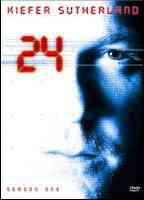
i watched 24 on a set of DVDs; most of the time the screen was on my lap (via my apple notebook) or right in front of me on a table. the intimacy of watching in that way, plus the duration created an experience that was much more akin to reading a novel you can’t put down than watching a movie or tv show.
it would have been even more interesting and more novel-like if all 24 episodes were available simultaneously with a complete index of scene content and dialog so that i could have gone back to review key scenes the way you can in a book.
not arguing here that there are no differences between novels and films, but that some of what makes a book a book — random access and intimacy — can be found in new media and you can see the seeds of new forms of expression. figure that people coming out of film school in the next ten years will find themselves going in one or two ways; either making giant spectacle films intended for 3D imax or making very dense, intimate novel-like “films” that are intended for an audience of one at a time.
email mystery novel and remix reading
Just back from the wonderful Decade of Web Design conference in Amsterdam – more to come on that soon. Catching up now on reading and turned up two interesting links on Boing Boing… First is a mystery novel that you read in email installments over a 3-week period. It’s not free – costs $7.49 – but I figured I’d give it a try. I should receive the first part tomorrow.
The other thing is an exciting collaborative writing project in Reading, UK. From their site:
“Remix Reading is an artistic project based in Reading, UK. It’s aim is to get artists (working with music, video, images and text) to come together and share their work, be inspired by each others’ work, and ultimately to create “remixes”. All material on the web site is released under a Creative Commons license, which allows you to customise your copyright so others can use, copy, and share your work as you choose.”
the untold (until now) history of the russian web
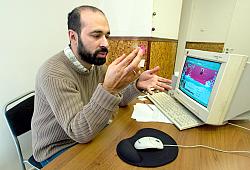 Great piece in this week’s Context, the weekly arts and ideas section of The Moscow Times, about the first history yet written about the Russian web. Feeling the Elephant (Oshchupyvaya Slona), by writer, journalist, and core member of Russia’s online literati Sergei Kuznetsov, was published late last year and has already engendered a small storm of controversy for alleged omissions, mischaracterizations and the like. But Kuznetsov says he never set out to write a “proper” history, simply an insider’s account – bias, warp and all – of the literary web he played a central role in creating. This lack of propriety is not altogether unfitting since there’s much in Russia’s neck of the web that, according to our stricter standards, isn’t at all proper, and this goes beyond mail order brides.. Intellectual property is only a fledgling idea there, and you can easily find practically any text online, from Pushkin to Pelevin, including fresh-off-the-press, protected material. The most popular of these literary indexes is Maxim Moshkov’s Lib.ru.
This loose, free-wheeling web culture has been both a boon and a curse to Russia’s writers and readers. On the one hand, it is easy and free to publish, and likewise easy and free to read. But with the exception of the most popular authors – the churners out of mysteries and bodice rippers – it’s damn hard to make a living writing in Russia (much harder than in the West, which is tough enough), and all this free literary trafficking, while rousing and diverse, bitterly emphasizes the underlying poverty. This begs the question, just as relevant here as anywhere else.. how can writers continue to make the web richer without becoming impoverished themselves?
(photo: Vladimir Filonov / Moscow Times)
future of the news?
The year is 2014, and “everyone contributes to the living, breathing mediascape” by way of EPIC, the Evolving Personalized Information Construct. EPIC results when the hegemony of Googlezon (a media giant formed by the merging of Amazon.com and Google) trumps the Microsoft-friendster-newsbotster alliance, having long since obsoleted conventional news agencies. The “news wars” of 2010 are forever settled when Googlezon begins employing “fact stripping” technologies that customize news, usually bastardizing the truth in the process.
EPIC 2014 by Robin Sloan and Matt Thompson is an eight minute Flash production that charts the evolution of capitalist concerns in the digital world via flickering, faux-historic-newsreel footage that is as riveting to watch as a twenty-car pile up on the freeway.
Not only do Googlezon subscribers gain unlimited space in which to post the minutiae of their lives via Google Grid, they also shape their very own worldview by using “editors” which will harvest and (re)combine news that’s been mined from the torrent of available articles. Though the potential for an in depth and complex view of the world is afforded, “for too many” EPIC consists of a “collection of trivia, much of it untrue, all of it narrow and sensational”; thus, in “feeble protest” the New York Times goes offline, the “slumbering fourth estate” having awoken far too late.
This piece is a very sobering one to view immediately before I embark upon the Media Literacy class I’ve been so pumped about teaching. Indeed EPIC 2014 is not the work of chicken-little extremists, but issues from savvy techno-cultural critics and their cautionary tale is one that should give pause to any of us concerned with the future of the book (or any other communicative vehicle for that matter) in a consumer-driven individualistic society.
I think I’ve found the perfect text for the fist day of class….