
Can Google remain true to its promise to “do no evil,” now that it has shareholders to worry about, advertisers to please, and an ever-increasing reach into the repositories of human knowledge? Google still gives you that warm and fuzzy feeling. It’s got the goofy name, those cute seasonal tailorings of its masthead, the lava lamps. And this is not to mention the various amusing pastimes – the “Google Whack” game in which you try to find two words that cohabit only one of the search engine’s eight billion web pages; or every writer’s guilty pleasure, the Googling of the self, the “auto-Google,” that delicious act of cyber-onanism.
But where might it lead? One day, when I open my fridge, might a sensor not read my searching eye and know that I am looking for milk? And knowing that I have run out, suggest an array of retailers who might be able to replenish my supply? Could Google come to mediate every exchange of information, no matter how inane, or how carnal?
Or could it come to resemble something like the Central Intelligence Corporation in Neal Stephenson’s Snow Crash – a cross between the CIA, the Library of Congress, and DARPA’s “Total Information Awareness” program?
MercuryNews.com | 12/14/2004 | Does Google move augur commercialization of libraries?
Author Archives: ben vershbow
the book as object and performance – exhibit in New york
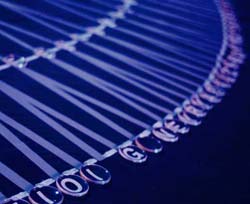
“The Book as Object and Performance is an exhibition of artworks that takes the format of the book as a point of departure to deconstruct that which is bound up in text, image and the physicality of books.”
Through January 22 @ Gigantic Art Space
*Plus: tomorrow night, in conjunction with the exhibition!
Thursday, December 16, 6-8pm: an evening of performances by AUX (Reynard Loki and Christopher Shores), Joseph A. Fish, Jesal Kapadia, Pia Lindman, and Maciej Toporowicz..
books behind bars – the Google library project
How useful will this service be for in-depth research when copyrighted books (which will account for a huge percentage of searchable texts) cannot be fully accessed? In such cases, a person will be able to view only a selection of pages (depending on agreements with publishers), and will find themselves bombarded with a variety of retail options. On a positive note, the search will be able to refer the user to any local libraries where the desired book is available, but still, the focus here remains squarely on digital texts as simply a means of getting to print texts.
Absent a major paradigm shift with regard to the accessibility and inherent virtue of electronic texts, this ambitious project will never achieve its full potential. For someone searching outside the public domain, the Google library project may amount to nothing more than a guided tour through a prison of incarcerated texts. I’ve found this to be true so far with Google Scholar – it turned up a lot of interesting stuff, but much of it was password protected or required purchase.
article in Filter: Google — 21st Century Dewey Decimal System (washingtonpost.com)
Lawrence Lessig on “writing”
Closing the USC conference “Scholarship in the Digital Age,” Lessig spoke on “free culture” and the current legal/cultural crisis that in the next few years will define the constraints on creative production for decades to come. Due to obsessive fixation by a handful of powerful media industries on the issue of piracy, the massive potential of networked digital culture that has briefly flowered in the past decade could be destroyed by draconian laws and code controls embedded in new technologies. In Lessig’s words: “never in our past have fewer exercised more legal control.”
Lessig elegantly picked up one of the conference’s many threads, multimedia literacy, referring to the bundle of new forms of cultural and scholarly production – remixing, reusing, networking peer-to-peer, working across multiple media – as simply “writing.” This is an important step to take in thinking about these new modes of production, and is actually a matter of considerable urgency, considering the legal changes currently underway. The ultimate question to ask is (and this is how Lessig concluded his talk): are we producing a legal culture in which writing is not allowed?
more from USC conference: useful dichotomies for reconsidering scholarship in the digital era
from Tara McPherson:
– content/context
– practice/theory (practice as research in action)
– process/product (embrace productive failure)
– open/closed (what does versioning mean?)
– dialogue/argument (new ways of marshaling evidence; what does it mean when argument shifts into dialogue?)
– pedagogy/scholarship/service (tenure system is archaic; most non-traditional modes of scholarly inquiry are considered nothing more than community service)
– many/single (how do we rethink collaboration?)
– tools/theories (blurring that boundary)
Tara McPherson is Associate Professor of Gender and Critical Studies; Chair, Division of Critical Studies, School of Cinema-Television, USC; and editor of the forthcoming Vectors, an electronic peer-reviewed journal.
NYPL ebook collection leaves much to be desired
I just checked out two titles from the New York Public Library’s ebook catalog, only to learn, to my great astonishment, that those books are now effectively “checked out,” and cannot be downloaded again by anyone else until my copies time out.
It boggles the mind that NYPL would go to the trouble of establishing a collection of electronic titles, only to wipe out every advantage offered by digital texts. In fact, they do more than simply keep the ebooks on the level of print, they limit them further than that, since there are generally multiple copies of most print titles in the NYPL system.
The people responsible for this catalog have either entirely failed to grasp the concept of infinitely accessible, screen-based books, or they grasp it all too well and are trying to stunt it at its inception, perhaps out of fear of extinction of the print librarian. More likely, they are under heavy pressure by a paranoid copyright regime. Whatever the reason, the new ebook catalog shows a total lack of imagination and offers nearly no tangible benefit for the reader.
Beyond that, the books themselves are poorly designed and unpleasant to read. My downloaded copy of Conrad’s Heart of Darkness (which, by the way, I found in the “Romance” section) evidences no more than ten minutes worth of design work, and appears to be simply a cut-and-pasted ASCII file from Gutenberg with a garish graphic slapped on the cover. My copy of Chain of Command by Seymour Hersh was a bit more respectable – more or less a pdf facsimile of the print edition.
On an amusing note, the “literary criticism” section is populated almost entirely by Cliff’s Notes.
3,000 electronic titles at new york public library
This is the third Times article this week on e-books. What’s happening?
“Libraries Reach Out, Online”
No Need to Click Here – we’re just claiming our feed at Feedster
An Exchange With Alan Kay
Hi Bob –
I’ve been asked questions like this several times in the past, and have never been able to come up with a satisfactory answer. I estimate that I’ve read between 15,000 and 20,000 books, with about 1/10th of these being really worthwhile, and perhaps another 1/10th or more really useful as “how not to think about it” that serve as a large field of comparative and contrasting ideas. I think a central answer to your question from me is that I would simply not have my world view if it weren’t for books, and not just a few books but the wealth of multiple perspectives that the printing press made possible and encouraged.
The most important events in my life were learning how to read fluently before school age, and having read many books by the time I got to the constricting dogmas of school learning. This allowed me to resist and to gradually build my own mind, again largely through reading. I believe this is also an important answer to much of the good that has happened in the last 400 years. It’s hard to pick 3 books that changed the world, but there is no doubt in my mind that the combination of new kinds of argumentation and many more points of view from thousands of books broke apart a lot of the rigidity of thought that has characterized most of human existence. Sorry, best I can do …
P.S. If you had to pick one for the 17th century, it would be Newton’s Principia Mathematica. I came upon this in my late 20s or early 30s and it would be my pick for the number one “amazing book” ever written. However, my course and POV were already set by the time I actually got around to buying and reading it.
Cheers, Alan
to which Bob replied:
So . . . do you think books are playing the same role today as they did 40-50 years ago when we were growing up? My instinct is no . . . but even if i’m right, i’m not sure if it is because times are different or because the media landscape has changed so dramatically.
to which Alan replied:
No [in answer to “do you think books are playing the same role today … ] and I think that much of the new technology in the 20th and 21st centuries has been used to automate old oral forms (telephone, radio, movies, TV, voice mail, etc.) and this has taken quite a bit of day to day reading and writing out of most peoples’ lives. We are wired for oral discourse and most are happy to stay there. The larger scheme of things was greatly aided by having writing be the only long distance replicable technology around for a long time — and given that only 1% in Europe in 1400 could read, it really took the printing press to spread the hard to learn and literally mind-changing technology around sufficiently.
Also, McLuhan and Postman were pretty much right: that TV, especially, is a media form that delivers a 24 hour wall to wall environment that seems total, but lacks many important message carrying (and carrier) properties that the “written symbolic” media has. So, it’s not that TV actually tells people how to think, but, as an environment, it is what people try to learn to be fluent in and adapt to, and this makes it difficult for most people to formulate non-TV kinds of thoughts (many of which have been critical to the development of the last 400 years). And TV is much easier to “learn”. In simple: if you don’t read and think for fun, you won’t be fluent enough to read and think for purpose. This is why, when asked, I advise parents to treat TV and other similar media (including computer) like a cabinet of loaded guns or liquor. Locking it up is good, but not having in the house is probably better. But, since they are avid TV watchers and non-readers themselves, this advice has no effect. I think things are getting worse in part because TV is progressively making many more bad ideas seem normal.
Cheers, Alan
…and again, later on…
Hi Bob –Your questions got me thinking about certain books over the years. I stand by my earlier claim that it was the totality of many many books that did the job on me. But, still, there were a few, especially some very early ones that got me thinking one way and not another. For example, the first adult book I read all the way through — maybe at age 4 – was my father’s copy of Edith Hamilton’s Mythology. I originally read it because I had gotten interested in the ancient Greeks (he was quite interested). But the last part of the book contained Norse myths and these were in some cases similar to the Greek ones. This got me to realize that these were just stories and needed more than claims to back them up. This helped tremendously in resisting the Bible during later attempts to force this on me. Another early book was a long one, also my Dad’s, Breasted’s Ancient Times, maybe read at age 6 or 7. Again, I originally started reading it because I though ancient (and “lost”) civilizations were cool (and loved the different architectures, etc.). But, I started to realize that human beings are driven to similar forms under similar conditions, etc. This led me to Anthropology later on.
A Life Magazine on the Holocaust (published in 1945, but I saw in 1947 at age 7)completely horrified me, and made me afraid of adults to this day (and rightly so).This was likely one of the earliest insights and shocks that motivated my later long standing interests in helping children to think better than most adults do today. Willi Ley’s Rockets, Missiles and Space Travel around age 8 had a big effect. One memory from this book was the strange idea that you couldn’t just aim a rocket at the planet you wanted to go to, but had to create an orbit for the rocket that would cause it and the planet to meet many months in the future. I can’t quite explain why this had such a big effect on me. Science fiction, especially of Robert Heinlein, A. E. van Vogt, etc., had a huge effect, and got me to read many deeper books, like Korzybski’s Science and Sanity. To have a conversation with a professor who didn’t like grad students but did like McLuhan, I spent the better part of the summer of 67 really understanding Gutenberg Galaxy and Understanding Media. This was one of the biggest most useful shocks I got from a book. Marvin Minsky’s Computation: Finite and Infinite Machines had a great effect on getting me to think more mathematically about computing (maybe 1968), and this led to McCarthy’s meta definition of LISP in the LISP 1.5 Manual (a book of sorts), which was the key to really inventing objects “right”. And so forth …
Cheers, Alan
microlit looms large

We’ve been hearing more and more about the phenomenon of books downloaded to a cell phone screen, so much so that even the mainstream press has been talking about a resurgence of e-books – a topic they almost entirely dropped after the efforts of Microsoft and Gemstar failed to take off a couple years back. And people are doing more than simply reading books on their phones – they can surf the web, watch soap operas and, of course, play video games as they throttle through the subway or break for lunch.
Perhaps most interesting is that while many cell phone readers are downloading conventional print texts – novels, popular nonfiction etc. – there are many more, especially in Asia, who are downloading literature that is being written exclusively for this new medium, particularly serialized novels. These stories are intended for bite-sized consumption, peppered throughout the day, week or month. And they often employ the new technology as literary device – SMS romances, mysteries spun from a single errant text message. Once again, the medium proves to be the message..
It’s hard to tell where this is going, but it’s certainly more interesting than the prefab model promoted in the first generation of e-books. There is something totally original, totally native, about this new wave of digital reading.
Take a look at this piece from yesterday’s New York Times…